Case study · Hey Rafi
Designing the customer experience for an AI-powered real estate platform
I joined Rafi as a designer and ended up working across product, AI, customer experience and the systems behind them.
- Role
- Lead Product Designer
- Company
- Hey Rafi
- Timeline
- Jan 2025 – Sep 2026
- Team
- Product, Customer Success & Engineering
- Focus
- Product design, AI behavior, customer experience, systems
01 · Evolution
From designing the brand to designing the systems around the product.
- 01
Brand
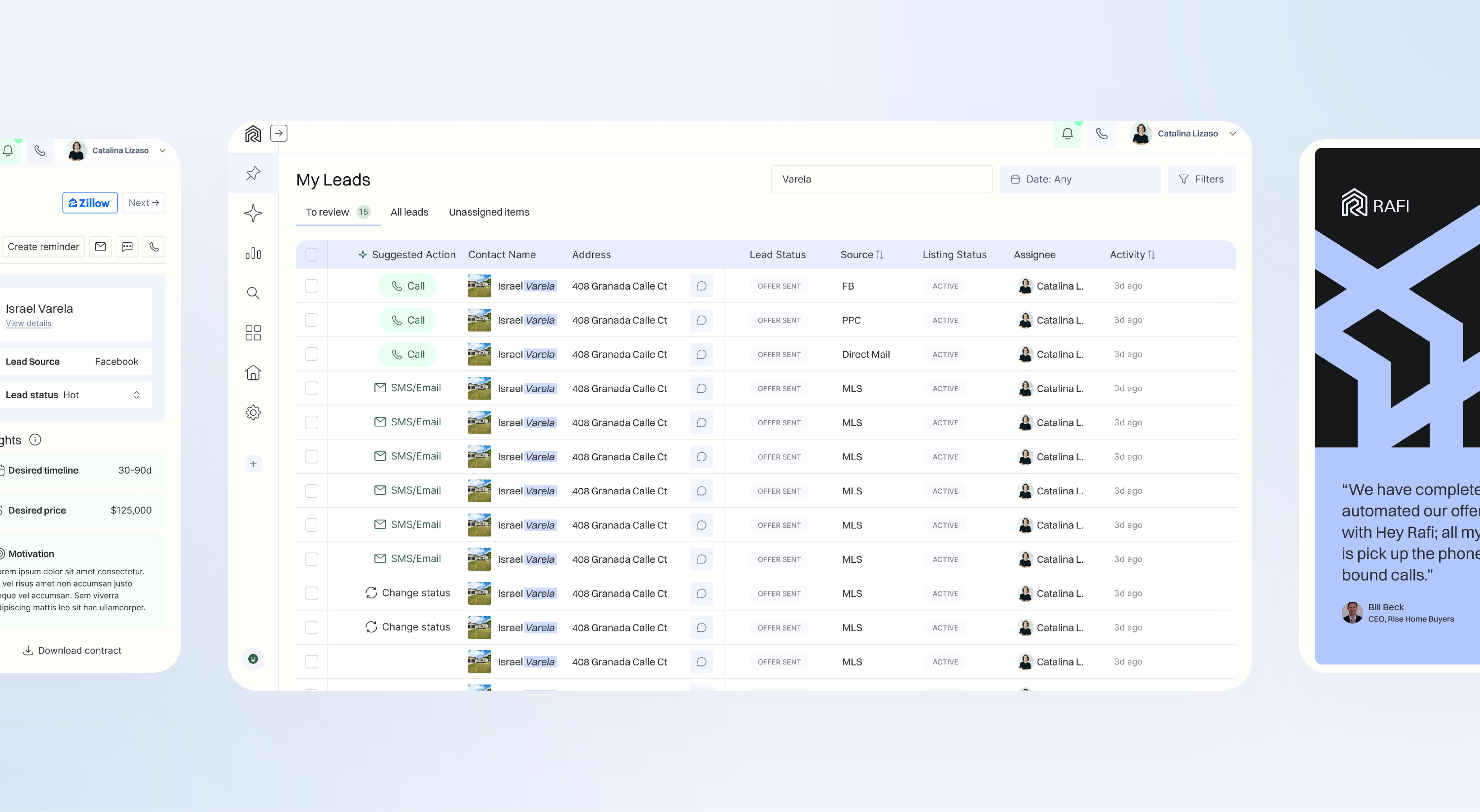
I started by building the visual foundation for Rafi, from its identity and brand guidelines to the website.
- 02
Product
As the product grew, my work expanded into UX/UI, the dashboard, onboarding and the workflows that supported the customer experience.
- 03
AI + CX
From there, I moved deeper into how the AI behaved, defining playbooks, messaging guidance, cadence, conversation logic and the boundaries between AI and human support.
- 04
Systems
Eventually, the work extended beyond the product itself into onboarding systems, internal workflows, feedback loops, automation and the systems supporting the team.
02 · The challenge
Buying an AI product was only the beginning.
Customer experience
Rafi could be purchased quickly, but getting an account from purchase to a successful launch required significant manual intervention.
AI product
At the same time, the AI needed clear rules for what to do, what to say, when to follow up, and when to involve a human.
03 · Onboarding
From hands-on onboarding toward self-service.
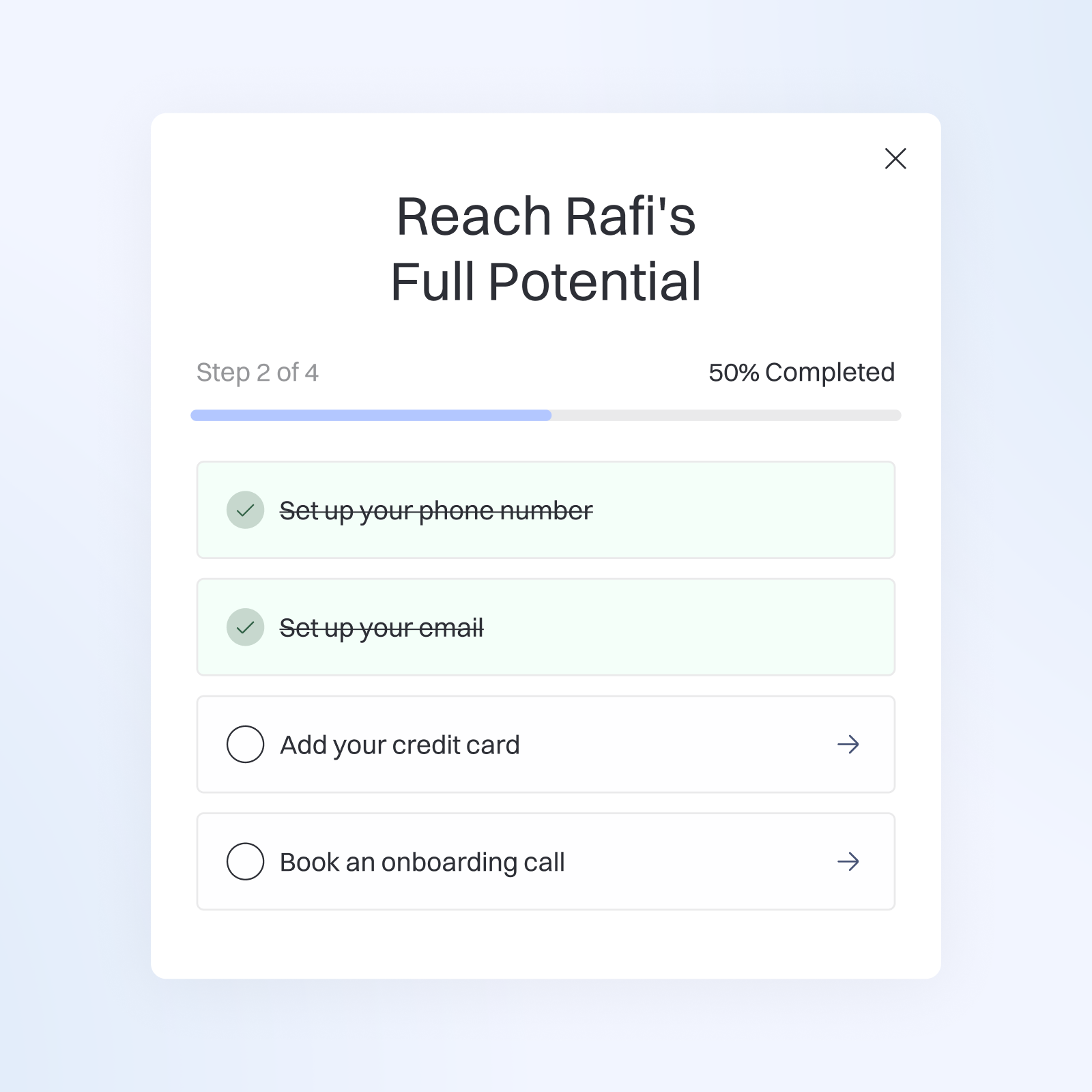
Rafi offered three different products, each with its own configuration requirements and a high degree of customization. Getting an account ready to launch involved multiple dependencies across product setup, integrations, communication channels and AI configuration.
- 3 products
- Offer Tool · Campaigns · Prospecting
- Multiple configurations
- Email · Phone · Business profile · Integrations · Playbooks · etc.
- Outcome
- Ready to launch
Together with the Product team, I helped turn that complexity into a more structured onboarding experience, moving the customer journey from a hands-on process toward a more self-service system.
04 · AI behavior
AI UX isn't only what the AI says. It's what it does, and when.
Playbook
What the AI should do
Messaging guidance
How it should communicate
Cadence
When it should follow up
These rules became part of the product design: defining what the AI should do, what it should never do, when it should act, when it should follow up and when it should involve a human.
Decision logic
- Interested + ready
- Schedule appointment
- Interested + wants a callback
- Schedule callback
- Interested + not ready
- Keep Prospecting active, follow up later
- Not interested
- Close / disqualify
- Doesn't recognize inquiry
- Apologize / close
- Do not contact
- Stop messaging
05 · Edge cases
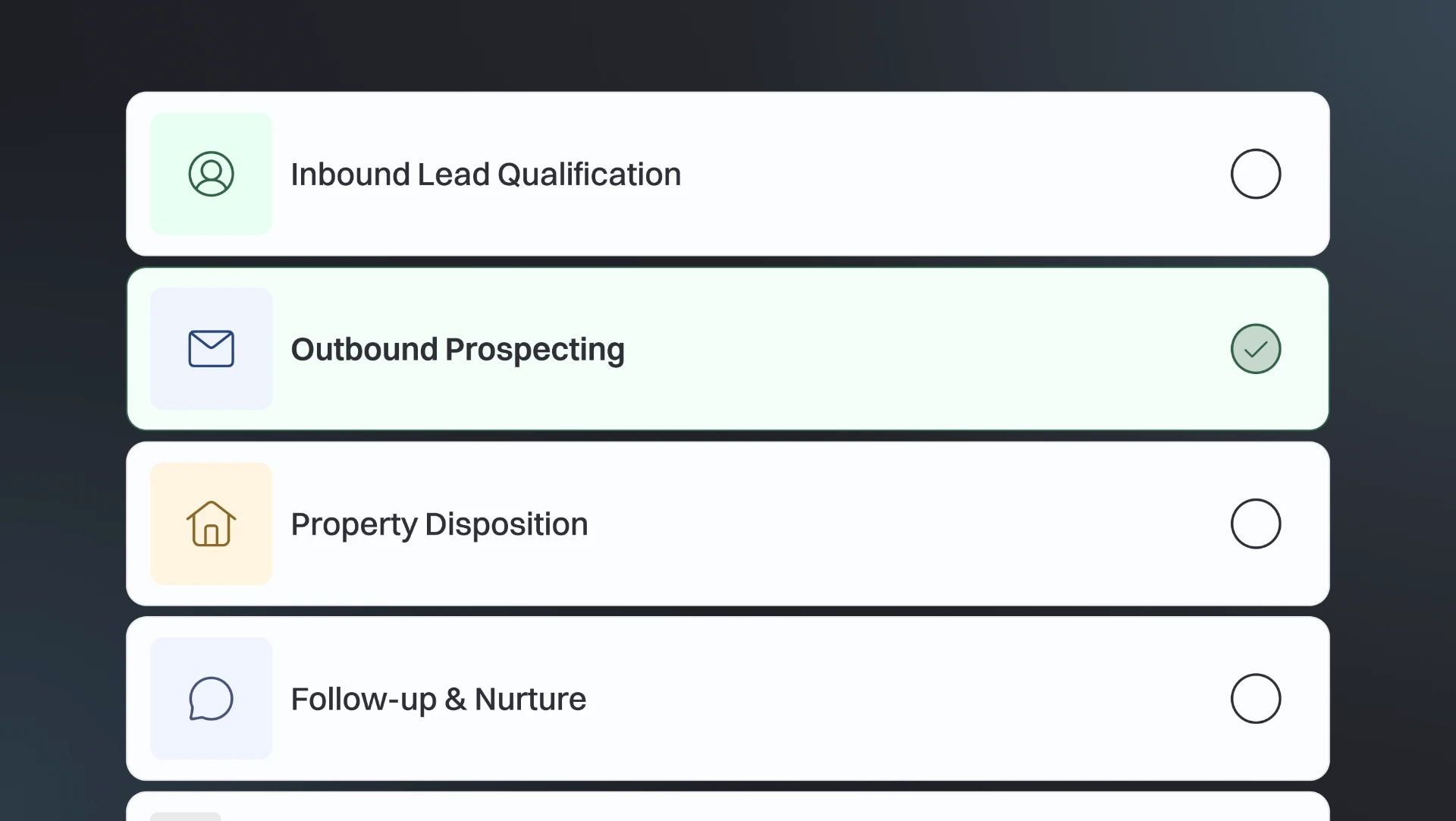
Edge cases aren't exceptions to the product. They're part of the product.
- 01Interested, but not ready
- 02Callback vs. property visit
- 03Unknown inquiry
- 04Do not contact
- 05Availability conflicts
- 06Human escalation
06 · Feedback loop
Customer feedback became product decisions.
Listen
- 01
Feedback
- 02
Pattern
Define
- 03
Problem
- 04
Decision
Ship
- 05
Test
- 06
Document
- 07
Automate
Working closely with Customer Success and Engineering, recurring customer friction was traced to its underlying problem, turned into a product or UX decision, tested, documented and, where possible, implemented or automated.
Where it applied
- Appointment scheduling rules
- Callback vs property visit
- Timezone handling
- First lead verification
- Human escalation
- Onboarding exceptions
- AI behavior
07 · Beyond the product
Company context
During this period, Rafi's overall user base grew approximately 4×.
Systems behind the customer experience.
My work expanded beyond the product UI into the systems supporting the customer experience and the team behind it.
Customer experience
- Onboarding systems
- Self-service workflows
- Feedback loops
- AI configuration
Team & operations
- Project management boards
- Cross-functional workflows
- Social media team
- Automation
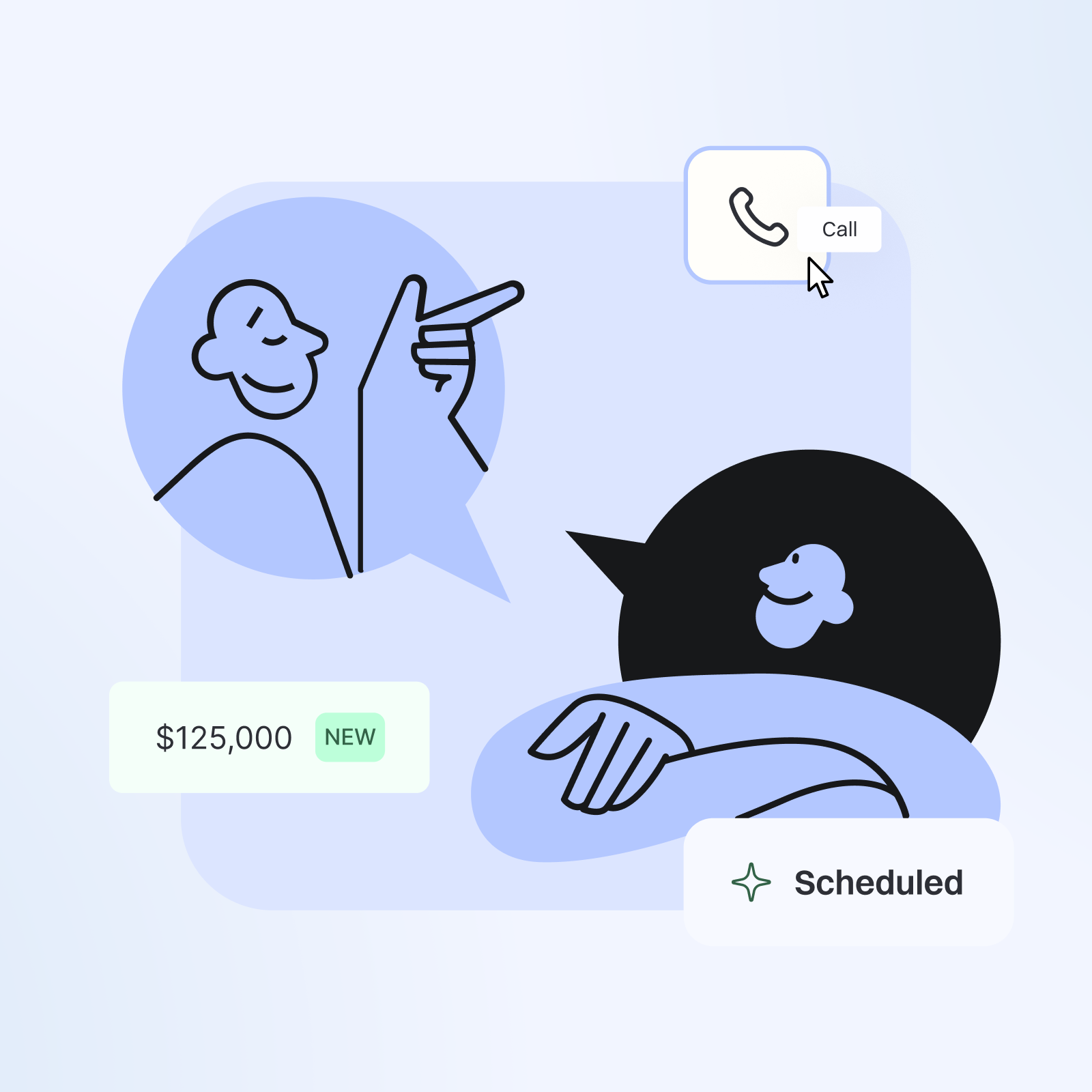
The goal was not only to improve individual screens or flows, but to make the whole system easier to operate, support and scale.
08 · Content & community
Building the content ecosystem around the product.
As Rafi grew, my work also expanded into the content and community supporting the product experience.
- Onboarding & help
- We created onboarding and help content to make the product easier to understand, configure and use without relying on constant human support.
- Social media
- I built and led the social media team, defining the workflows and systems needed to consistently create and publish content around the product.
- Community
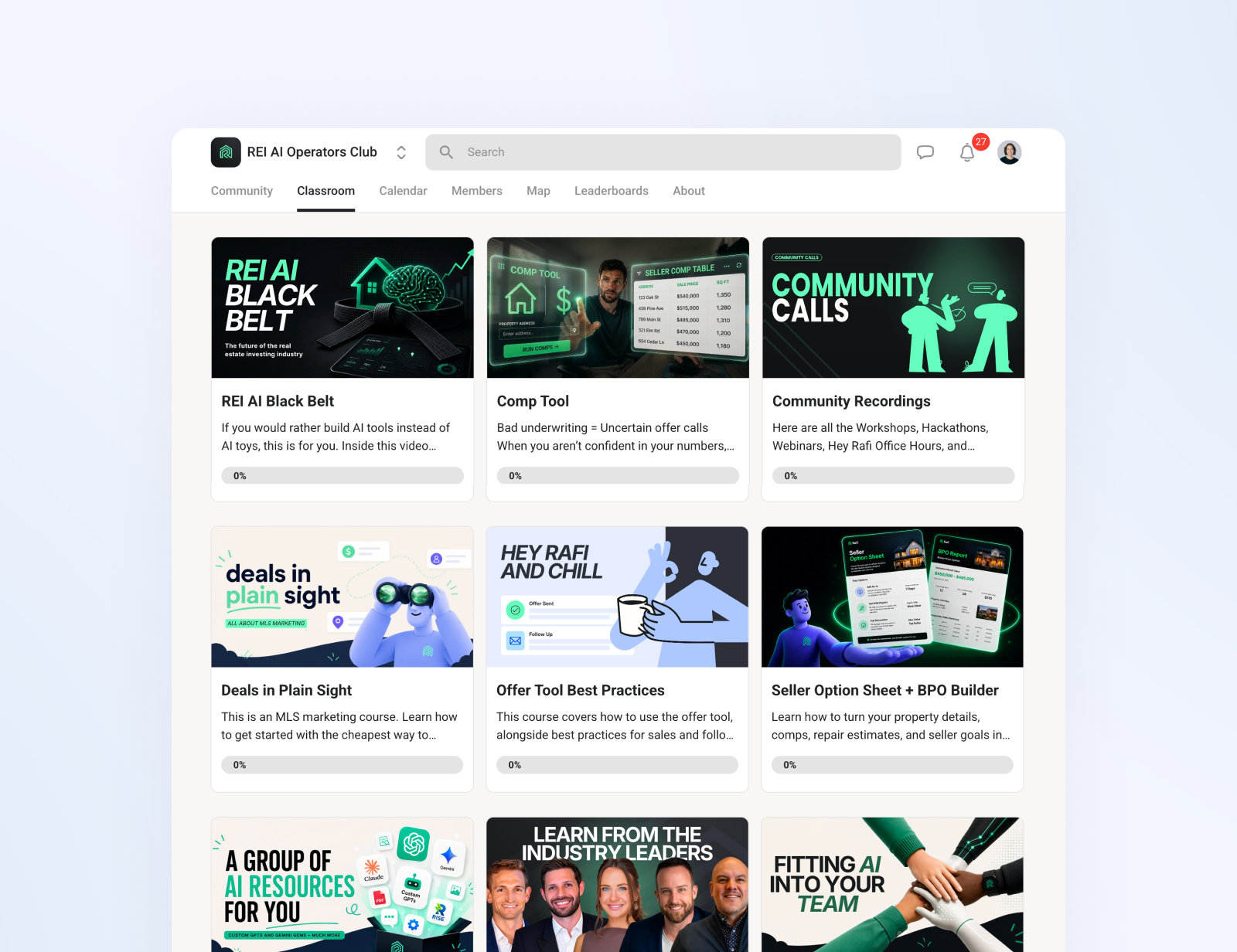
- We built a Skool community with educational resources, onboarding material and a growing library of content to support customers beyond the product itself.
09 · Reflection
Designing AI products isn't only about designing what the user sees.
It's about defining what the system knows, what it should do, what it should never do, when it should act, and when it should step back and involve a human.
Contact